Everyone Counts or Nobody Counts
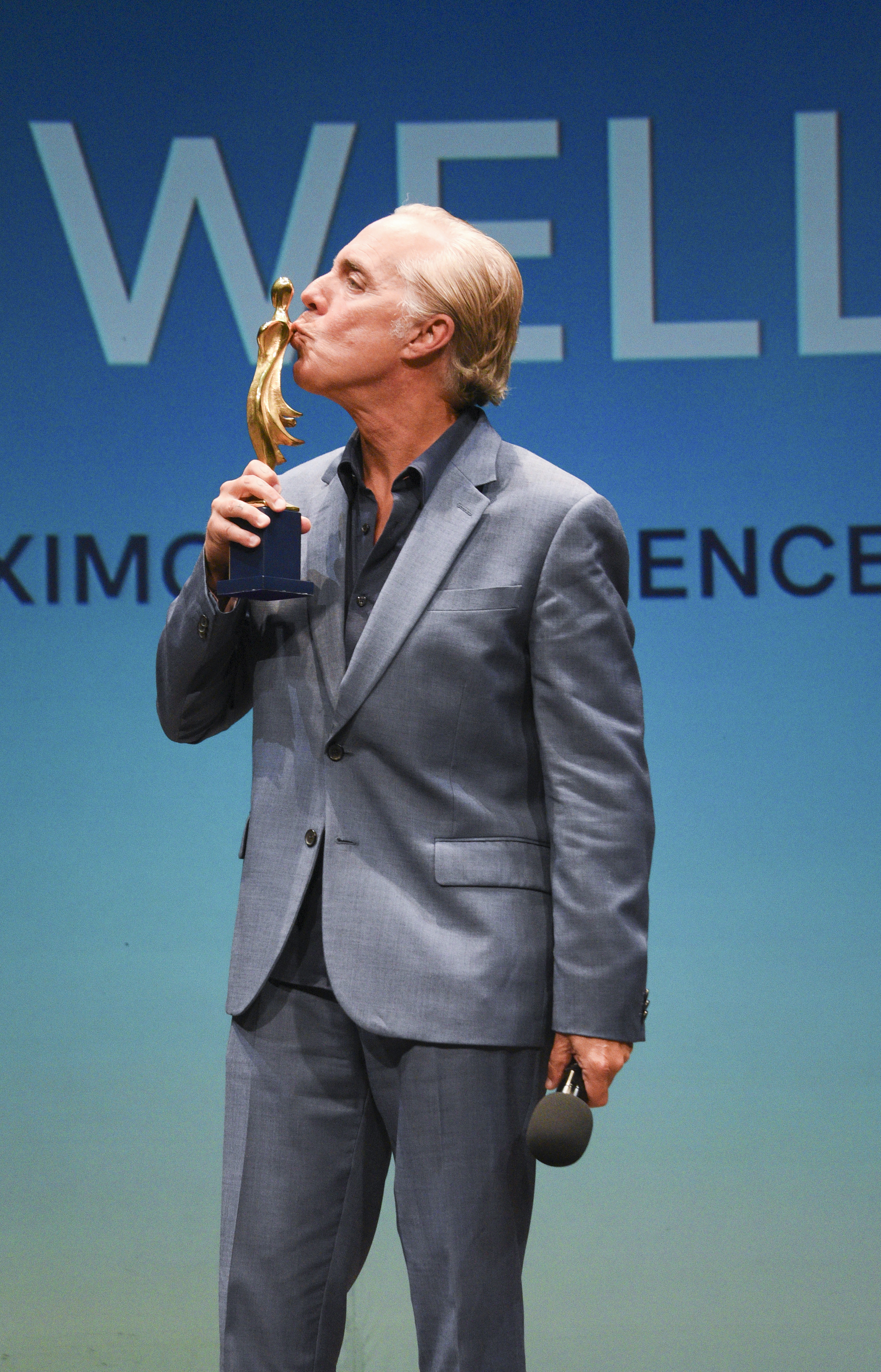
Titus Welliver, known to television audiences primarily as LAPD Detective Harry Bosch, a role he has embodied in streaming television for over a decade, was honored at the most recent edition of the IGS Festival in Rimini. The award, he admits in the interview, came with an unexpected weight. “I had never been to Rimini before,” he told me the day after the opening ceremony, “and the truth is, I’m very impressed. There are an incredible number of film festivals, but this one focuses on series; coming here and receiving this award is an enormous honor.”
With a series, you slip into the skin of the same character across many episodes. Does this format open up more room for exploration, improvisation, and letting the character mature compared to a role tied to a single script?
I think what we used to call television isn’t real television anymore; today, it’s all about streaming. Of course, we still have classic television, but that operates under a different structure. A streaming series has a different kind of cinematography, a different level of writing craft. Making a series these days is basically like shooting eight or ten movies of fifty minutes each. On a traditional network, you have commercial breaks, and in the end, the script gets tailored to suit the advertisers. With streaming, you focus on what matters most: telling the story. Therefore, these productions resemble cinema much more closely.
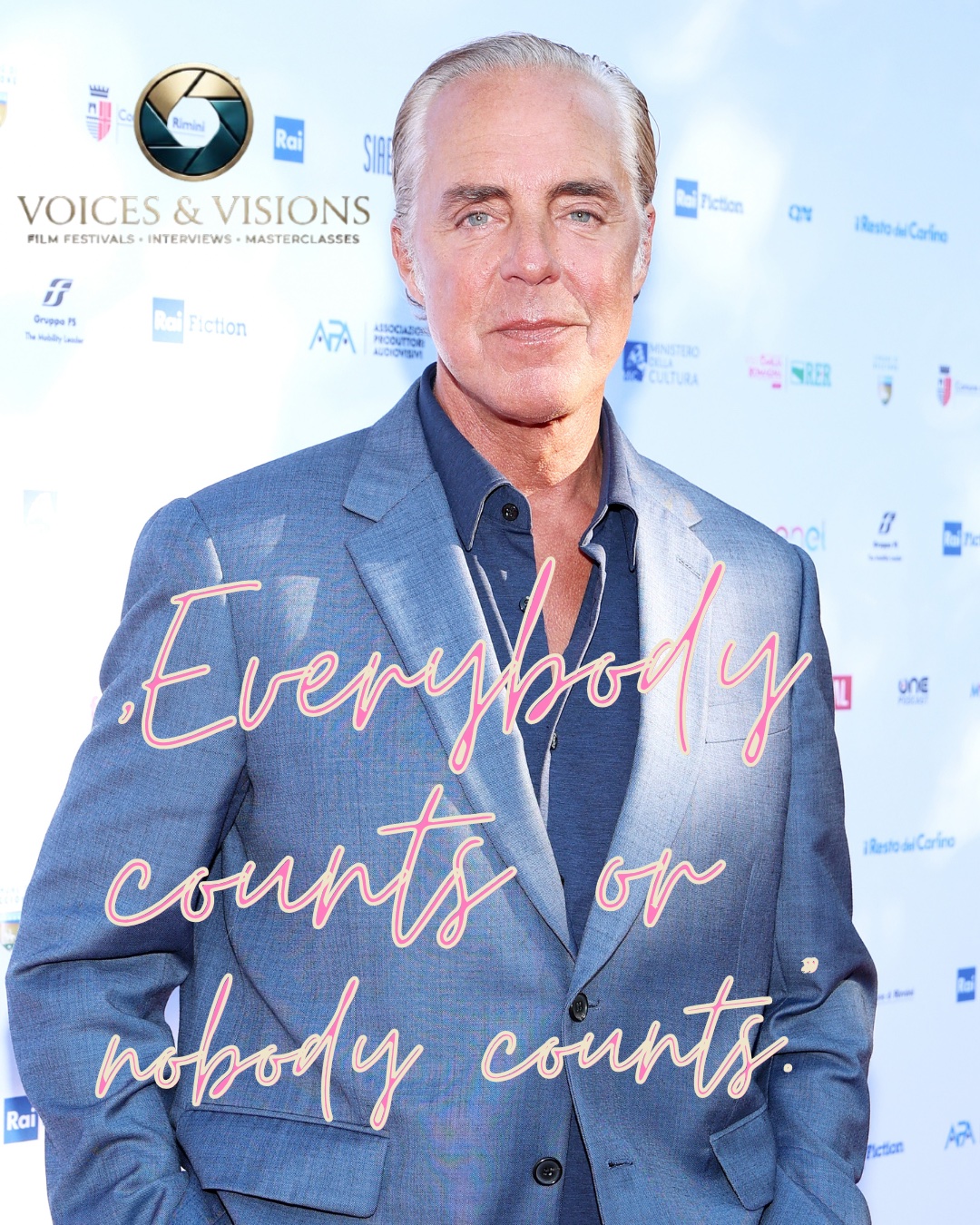
Bosch’s line “Everybody counts or nobody counts” has become a kind of credo for the character. Does this line still make sense in a time of waning trust in institutions?
Yes, I think you should live by this credo; if you possess even a shred of humanity, that’s what it’s all about at its core. It stems from Harry’s past: his mother was a sex worker and was murdered. Since she was part of a marginalized segment of society, there was no urgency and no real effort to solve that crime. The attitude was, “Well, she’s just a sex worker.” What Harry stands for is that it doesn’t matter at all; even if the victim is a murderer, a crook, or someone on the fringes of society, ultimately a human being was killed. My job as a homicide detective is to solve the murder and exact some form of justice, no matter who the victim is, because a loss is a loss and death is final. Harry says that emotional closure is a myth. The only thing he can do is try to administer justice. That’s his moral compass, and I believe a lot of that is missing in humanity today. We live in a heavily divisive world globally of “pick a side,” and that’s a real shame. I feel like we’ve regressed on the evolutionary ladder and started acting somewhat primitively. There’s a lack of morality, and stupidity as well as brutality are being celebrated. That is discouraging for many people. I don’t turn on the TV in the morning; I wait until I have my coffee and meditate before I look at my phone. Otherwise, I’d be in a bad mood all day.

Given this landscape: do you see your work as an escape hatch, or is there also an impulse to educate or prepare viewers for what might come?
Art has always been precisely that; it goes back to early humans, perhaps even before spoken language. We’ve always told stories, whether through cave paintings, songs, physically reenacting a narrative, or through music. All of that is storytelling. History has shown that in times of incredible hardship or during wars, people flocked to the cinema in droves to find escapism, and I believe we still use it for that exact purpose. But as an artist, I always hope, for better or worse, to make people think. If a film upsets someone and they think, “My God, how horrible,” then it has at least made them think. Perhaps it touched their deepest fears, made them smile, cry, or laugh. That’s what storytelling is all about. How a work resonates with the audience is ultimately subjective; that’s part of its beauty. It’s very similar to food: some people don’t like pizza, and others would tell you that you have a problem if that’s the case. I do believe, however, that if artists try too hard to pursue a “purpose,” the work comes across as pretentious and stilted, and as a viewer, I have no desire to watch something like that. Don’t tell me how I’m supposed to feel. The moment a work tells me it’s profound, I stop believing that it actually is.
Do you already feel this pressure in your own work? Is the freedom of storytelling in danger right now?
I am absolute of the opinion that there are various levels of censorship. I think it’s important to be sensitive; I’ve always felt that way, that’s nothing new to me. But a large part of what they call protective barriers or political correctness has been perverted to a certain degree. Today, we are so hypersensitively careful not to offend anyone even in the slightest that there has been a genuine decline in openness in artistic expression. Comedy in particular has become very puritanical and heavily censored. Of course you have to be sensitive to the feelings of others, but you also have to deal with the reality of human nature. There are people who tell you, “Don’t you dare say that,” and when you reply, the answer is, “We don’t want to touch that subject, that’s dangerous territory, you’d better not mention it at all.” The moment you accept those limitations, you stop making art. You are dealing with a form of control that I would describe as totalitarian, even fascist. But history shows us that art ultimately prevails against something like that. It always has. Art holds up a mirror to society, and that is precisely why people often feel so put off: they simply don’t want to look at themselves in the mirror. That’s the hypocrisy, they cry “How could you?” even when it is spot on. You have to handle all of this with a certain balance. If not, why even bother?

Titus Welliver on streaming versus traditional TV, the moral compass of Harry Bosch, and why true art must never bow to censorship.
#TitusWelliver #HarryBosch #BoschLegacy #StreamingCulture #TelevisionArt #Interview #PopCulture #FreedomOfSpeech #ArtAndCensorship #CrimeDrama
More dropping soon! Follow on IG so you don’t miss it!