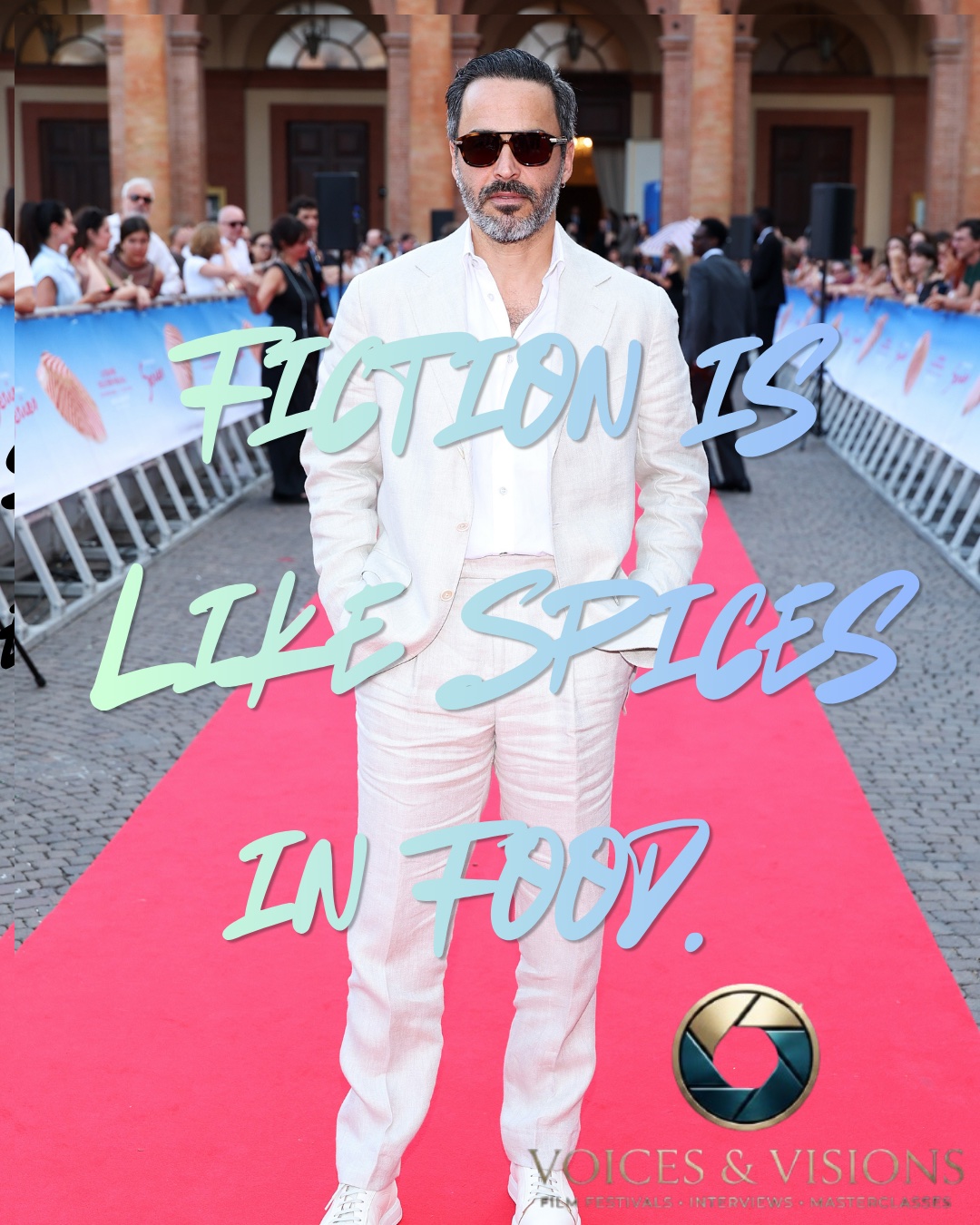
Fiction is Like Spices in Food
The Franco-Moroccan actor Assaad Bouab, known for Call My Agent! and for his role as Beaumarchais in the Apple TV+ series Franklin, served as a jury member at this year’s IGS Festival in Rimini and Riccione. In this interview, he speaks openly about his transition from film sets to the jury table, why series have become the richest playground for fiction, and the historical adventurer he is eager to bring to the screen.
When you spend your career being judged as an actor, how does it feel to sit on the other side of the table as a jury member here at the IGS Festival?
It’s a privileged position, and I don’t take it lightly. In any case, I think it’s wonderful that festivals exist; these are the moments when the entire industry comes together to celebrate cinema and culture.
Every time I’m asked to be on a jury, which doesn’t happen often, it leaves a lasting impression on me because I know exactly how vulnerable you feel as an actor. You put genuine vulnerability into your work and then open yourself up to criticism that can be constructive, but also harsh. That is why I always approach it with a sense of goodwill; I want to champion the work.
What criteria do you use to judge as a jury member?
To be honest, I’m not sure I have criteria in the traditional sense. I come from the theater, where you rehearse endlessly and question everything before facing an audience; behind every piece of work, whether it’s a short film, a series, or a play, there is invisible labor. What moves me is the sincerity in the work and the point of view someone is trying to defend. That matters far more to me than any checklist of criteria.
You constantly switch between theater, cinema, and series. How do you adjust the control you have over your performance depending on the format?
In the work itself, I don’t think there is actually any difference; a screen script is prepared in the exact same way as a play. What changes comes afterward. In the theater, you are the master of your performance from the moment the curtain rises until it falls. In cinema, you lose complete control over the final result: the script is frequently rewritten, and then comes the editing, where things are cut and reassembled.
To use a musician’s analogy, it’s a bit like the difference between playing live and recording in a studio, you simply don’t have absolute control over the end product. Sometimes it’s hard to watch the final cut because you see something in it that no longer feels organic to what you actually did. But the audience never notices that. On the other hand, at the end of a shoot, I’ve also had to thank the editor personally for the subtlety of what they captured in my performance, for the tiny reactions and nuances. Editing is an integral part of the creative process, on the same level as writing.
This is a series-focused festival. What does the series format offer you that a film cannot?
Above all, freedom. A character can develop over a larger number of episodes, and depending on the director, there is usually more room for improvisation. A series can run for several seasons, which creates a completely different dynamic for the writers, the crew, and the actors. By the second season, new partnerships or storylines can emerge that no one could have imagined in the first.
It’s a true playground of ideas for the screenwriters, and it’s deeply stimulating for us as well. And I believe that comes with a responsibility: some series are watched by a massive audience, and depending on the message you convey, they can genuinely shape people’s mindsets. There is room for entertainment and comedy, of course, but also for something educational; historical series in particular can remind audiences of pivotal moments from the past.
We currently live in a deeply polarized world, and I think that means taking the time to process things, understand them, and take stock, and only once you’ve done that is it truly the right moment to make series about them, in an effort to make sense of what is happening.
Artificial intelligence is already changing writers’ rooms. What role do you see for it in audiovisual storytelling?
It’s so new that right now, probably no one knows for sure. Every innovation carries risks, things that can slip beyond human control. If a script is clearly written by AI, you can tell; people can feel it. It lacks humanity; it lacks a soul. That is the danger when you rely on it in that way.
If it is used simply as a tool to refine certain aspects, that’s a different story. We are probably moving toward that kind of world, and people will have to adapt.
How do you choose your roles, or what makes you say yes to a project?
Honestly, I tend to let myself be guided by signs; I gravitate toward anything that resonates with something I have truly experienced. Signs act like a kind of lighthouse for me. That is partly why I have always been drawn to historical films and series, as a way to revisit the past.
For me, Beaumarchais was first and foremost a playwright, the author of The Barber of Seville and The Marriage of Figaro. Coming from the theater, that name carries a lot of weight. Playing him meant I really had to embody the man, so I read a considerable number of biographies, which was fascinating.
We just celebrated the 250th anniversary of the United States’ independence, and Beaumarchais was actively involved in that history by championing the American colonies against the British Crown. That is the kind of role that draws me to history in general: I always feel pulled toward places where you can revisit the past.
This attraction to history seems tied to a very personal project: a series about Ibn Battuta.
Exactly. My father is Moroccan, my mother is French, and I grew up in Morocco, so I am Franco-Moroccan myself.
Ibn Battuta left Morocco at the age of twenty or twenty-one and traveled for twenty-five years without returning home; we are talking about the 14th century, long before anyone in Europe spoke of America. He journeyed across Africa, Madagascar, Mali, present-day Ukraine, Turkey, India, and China.
I would love to explore that chapter of history through him. If one day I succeed in bringing such a series to life, it won’t be about meticulously retracing his itinerary, but about building fiction around him,something with real substance.
Fiction, when well told, can sometimes reveal more than reality; it is like spices in food, it brings out the flavors. Reality is always paramount, of course; fiction is simply the space where we can revisit and expand upon it.
What can we expect from you next?
At the moment, I’m shooting a series in Paris set in a maternity ward. It’s a place where so much happens, birth and everything surrounding it, and I believe that will yield extraordinary stories.
Afterward, in August, I’m flying to Canada for a crime series, which I’m very much looking forward to, and starting in September, I go straight into a series in England set during the era of Mary I and Elizabeth I.
Three completely different universes, one after the other. How do you manage to transition from one character to the next like that?
I don’t think it’s really a question of the characters; for me, a character doesn’t truly exist, it’s written on a piece of paper and simply passes through us.
The hardest part is entering and leaving a project. You meet people, spend weeks with them, real friendships form, and suddenly it’s over. It’s a bit like summer camp when you’re a teenager: everyone is crying after two weeks, knowing they might never see each other again. To me, that is the true difficulty, much more so than switching from one character to the next.
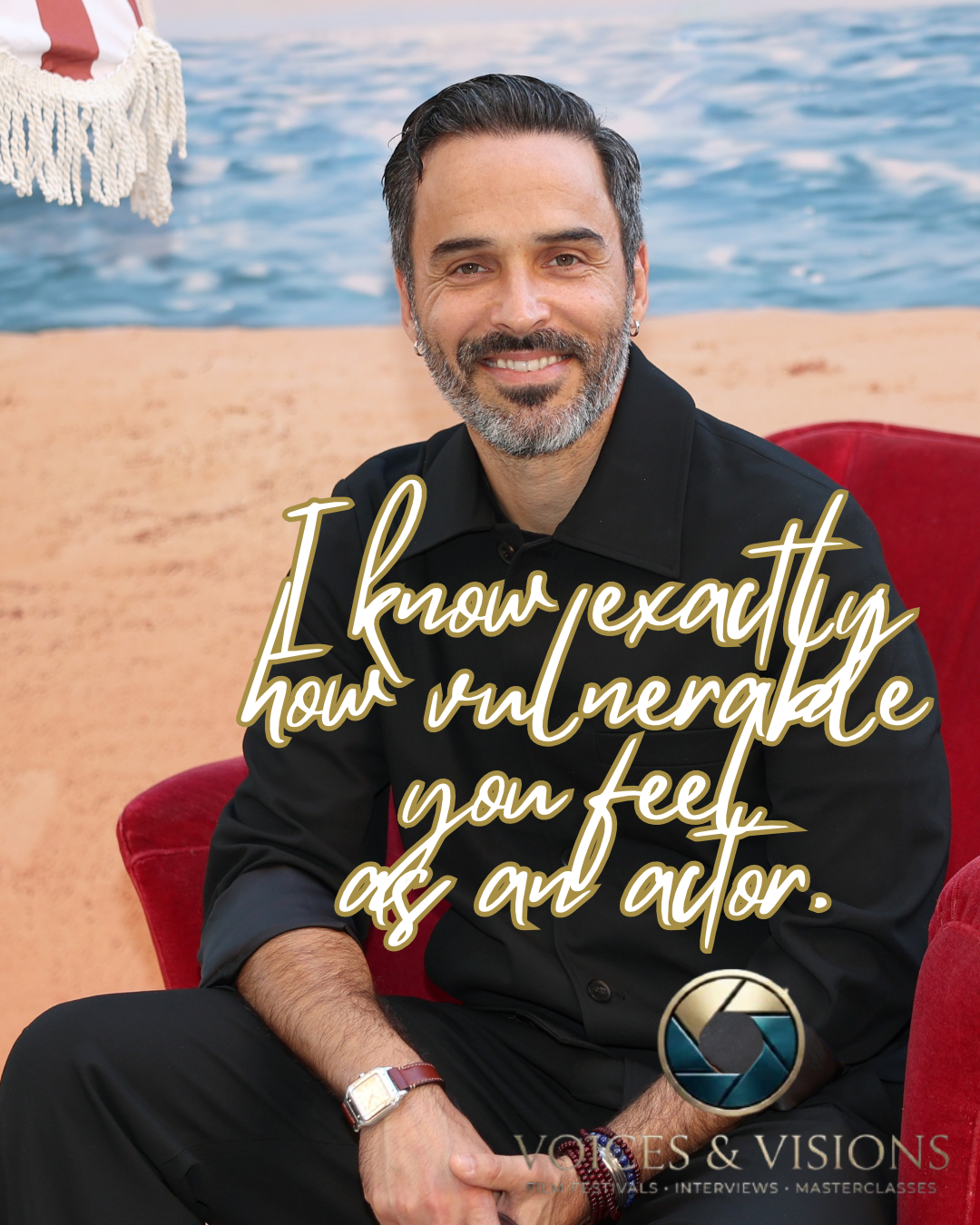
From Call My Agent! to the jury table: Assaad Bouab on the magic of storytelling and why series are the ultimate playground.
#AssaadBouab #CallMyAgent #IGSFestival #ActorLife #BehindTheScenes #SeriesLover #FrenchCinema #Cinema #Filmmaking #Storytelling #ActorInterview #AppleTV #Franklin
More dropping soon! Follow on IG so you don’t miss it!