
When Society Loses Its Course
On May 31 last year, Paris descended into chaos. What should have been a celebration of Paris Saint-Germain’s Champions League victory instead turned into a night of fires, looting, and mass arrests. Beyond the striking imagery lay a quieter fallout: injured protesters, bystanders caught in the crossfire, and exhausted police officers pushed to their limits. The violence exposed fractures far too deep for any football trophy to cover up.
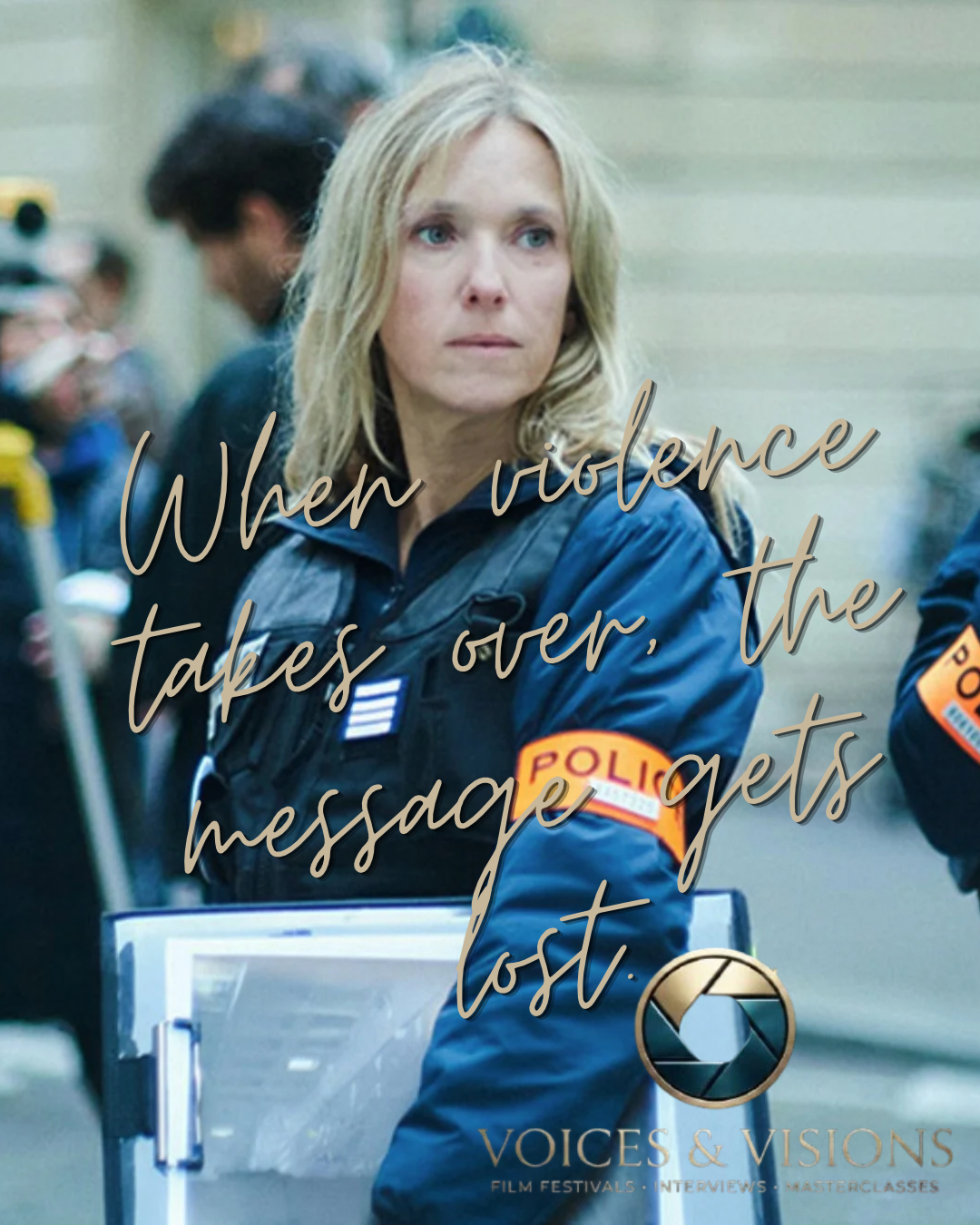
“When violence takes over, the message gets lost.” It’s a cliché, perhaps, but it cuts to the heart of what happened that night, and it captures the spirit of Dossier 137, a film that premiered at Cannes that explores the breakdown of trust during the Yellow Vest movement. At its center is Police Commissioner Stéphanie Bertrand, who finds herself caught in the middle: balancing protest against repression, institutional duty against public skepticism.
Her dilemma mirrors a broader societal tension. Violence is rarely the root cause; it is a symptom of underlying fractures within communities, institutions, and political rhetoric. It reveals who gets heard, who gets ignored, and who is silenced altogether.
The real tragedy is how the noise obscures the core issues: the demands for justice, dignity, and recognition. In Paris, as in so many cities worldwide, the calls for meaningful change were drowned out by the sound of destruction. The grievances behind the Yellow Vest movement dissolved into burning barricades, much like the joy of a sports victory was swallowed up by looting.
The cost is borne by many: those injured in the streets, ordinary citizens caught in the fray, and officers exposed to physical danger and public hostility. Yet their actual experiences are rarely the focus of debate. Instead, public opinion tends to polarize, flattening complex realities into quick, digestible slogans.
Turning a blind eye to these realities points to a deeper decay: transparency is fading, accountability is eroding, and public trust in institutions is evaporating. As the legal system is pushed to the margins, the middle ground where democratic debate ought to happen continues to shrink.
Both Dossier 137 and the events in Paris point to a uncomfortable truth: this middle ground is not a soft option, it is a space of responsibility. Reclaiming it requires uncomfortable conversations about inequality and the systemic violence that fuels this unrest.
If we abandon that space, anger and despair will fill the void, driving a destructive cycle that threatens the social fabric. The challenge for citizens, authorities, and law enforcement alike is to resist quick generalizations, rebuild trust, and reclaim that shared ground.
When violence becomes the only outlet for the unheard, society fractures. But if we slow down, listen, and engage with the complexity beneath the chaos, there is still a chance to hear the messages that were drowned out, and act on them.
Beyond the Screen: A Commentary on Current Unrest
What makes this cycle so frustrating is the sheer waste of constructive power.
Energy that could be channeled into drafting clear policy proposals, building petitions, or forcing institutional dialogue is instead burned in the streets.
When protesters, even students who know their movements will be hijacked, accept destruction over solutions, they hand their critics the ultimate weapon.
Rioting does not force a seat at the table; it burns the table down.
The true alternative to a broken system is not chaos, but the relentless work of building better answers.
Dossier 137 & today’s unrest: Why noise is drowning out progress.
#Dossier137 #BeyondTheScreen #FranceUnrest #SolutionsNotRiots #ReclaimTheMiddleGround #DemocraticDebate #PolicyOverProtest
More dropping soon! Follow on IG so you don’t miss it!